Let me tell you a bit about two patients from my practice
The first is a 37-year-old woman pregnant with her second child. Her husband is disabled, and she is the family's primary bread winner. She planned this pregnancy, and as soon as she discovered she was pregnant, she felt confident that her second baby should be her last.
She shared this with me early in her prenatal care and, as such, signed her 'tubal papers' (a consent for permanent sterilization, which, by Medicaid rules must be signed at least 30 days before a woman's due date). Though she received her prenatal care at our health center, she was an employee of the
local Catholic health system, and to avoid a large out of network co-pay, it
made financial sense for her to give birth at the Catholic
hospital. She was warned by several of her coworkers that the Catholic hospital "wouldn't let her" have a tubal
ligation. They were, indeed, correct. She did not get her surgery.
The second is a 32-year-old patient pregnant with twins-- she has a four
year old at home. Because of her twin pregnancy, after the second trimester, her care was transferred to a local obstetrician for care. The health insurance that she received through her work also limited the choice of hospitals in which she could deliver-- she, too, had strong financial incentive to deliver at the local Catholic hospital. She knew
there
was a moderately high likelihood she would have a cesarean section and
asked the physician managing her care for a tubal ligation if that were to occur. The physician
actively discouraged this, urging her to "wait until the boys are born to make sure they are
okay." She was never educated about any Church policy that might be an impediment to getting the procedure. She did, indeed, have a cesarean section. She did not have her tubes tied.
Choice
I use the word
choice a nauseating number of times per day
with my three-year-old. The choice of socks or no socks, bike or
stroller, carrot or cucumber, book first or bath first. "You choose", I
tell him. In so doing, I engage that age-old parental trick of
controlling the number and quality of choices he has and simultaneously
encouraging him to share the power in decision-making. It usually works.
 |
| http://marcellapurnama.com/why-we-are-afraid-to-make-a-choice/ |
The word
choice carries both tremendous power and stigma in the world of health care. In fact, when I use
health and
choice in the same sentence, it's hard not to think immediately of the abortion-rights movement-- often referred to as the pro-choice movement-- which has worked tirelessly for the last fifty years advocating the rights of women to choose to terminate a pregnancy.
But there are a lot more choices in health care than those related to abortion.
"It's your choice," you'll hear me say a zillion times per day at clinic. Mammogram or no mammogram. One hour glucose test or two hour glucose test. Trial of anti-depressant or trial of therapy. Antibiotics or wait 24 hours. Pill-form or liquid form. Induction of labor or wait another week. Physical therapy or osteopathic manipulation. Fluoride supplement or fluoridated toothpaste. IUD or NuvaRing. "You choose."
While
parental me is interested in maintaining supreme power over my preschooler,
physician me aims to engage in a more mature version of shared decision-making with my patients. Here's my quadruple aim when guiding patients through medical decisions: 1) Educate them about their health condition, 2) Offer a range of effective management options 3) Share my own informed position on the issue at hand (i.e. what I think which are the most reasonable choices), and 4) Engage participation in deciding what best to do in their unique situation.
There are two reasons I believe in this way of interacting with my patients. First, there is hardly EVER one correct way to do things in medicine. And second, by engaging and empowering my patients, I am certain that I am helping them be healthier. I am giving them a sense of ownership over their health and their health care decisions. And I am offering them choice.
Sometimes this strategy fails miserably. I know I have fallen flat on my face when a patient looks up at me and says, "I don't know, doctor, just tell me what to do." I sigh. And start again. And try to resist the urge to be a despot. (I save the despot role for after work when my son refuses to hold my hand crossing the street. Then dictator emerges in her full glory).
But most often (I think) my patients appreciate the process. After all, we are all senescent human beings with a particular understanding of what is happening in our own bodies, and when I am acting as a physician, I am not the end-all. I am an expert consultant. As I see it, my patients have come to me not necessarily for an unequivocal answer but for educated guidance. And, while I don't always know the answer, I can definitely guide!
 |
| http://www.lukechueh.com/paintings/black-in-white.html |
Plus, there is too much grey in medicine to be that black and white.
It is within this construct of choice, that I sit down to write a short piece about the power of the Catholic health care system and women's access to tubal ligation (aka permanent sterilization, aka "getting one's tubes tied"). After all, choice is not just about a woman's right to choose to terminate a pregnancy-- thank goodness, in this beautiful smart savvy world in which we live, we have birth control!
Women can choose NOT to get pregnant in the first place. And these women can make that choice as a temporary one (e.g. choosing birth control pills or a Nexplanon) or as a permanent one (e.g. choosing tubal ligation for themselves or vasectomy for their partners).
Women need to be aware of their choices.
The Catholic health care system serves 1 in 6
The Catholic health care system serves one in six patients in the US. There are approximately 620 Catholic hospitals in the US, comprising 12.4% of all community hospitals, with a particularly heavy presence in rural areas In fact, one-third of these hospitals are located in rural areas-- important because they may be the only reasonable choice for patients, particularly those with transportation challenges.
Here in California, Dignity Health (formerly Catholic Healthcare West) is the second largest hospital system, following Kaiser. Sutter is number three. If you combine St. Joseph's Health (also Catholic), then Catholic hospitals serve the largest quantity of California patients at 11.6% of all patients. And where there are hospitals, there are affiliated clinics and practices, bound by the doctrine of the leadership of those hospitals.
I do not doubt that these hospitals and the people who work within their walls provide excellent care to patients. In fact, last year, I visited a very ill patient of mine at our local Catholic hospital many times and was consistently and thoroughly impressed by the upkeep of the facility, the skill and kindness of the staff, and the quality of care he received.
However, as an advocate for women having an empowered choice in how they control their fertility, there is are some obvious problems. As policy, Catholic hospitals are not permitted to permanently sterilize, and yet, most facilities don't openly share this policy with the very women who are asking for these services.
It is unspoken. And choices left unspoken are not choices at all.
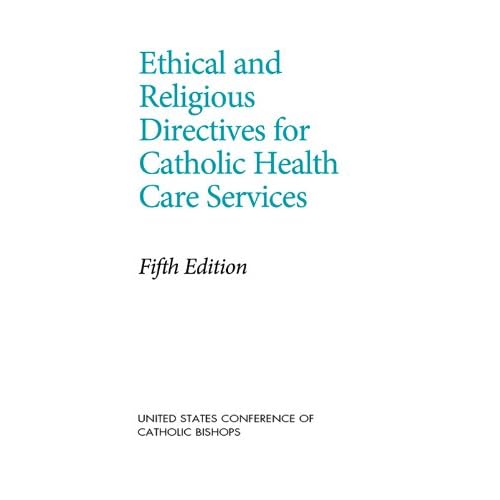
The Ethical and Religious Directive (ERD)
Women utilizing a Catholic-affiliated health care system should know
that national Catholic hospital policy directly prohibits tubal ligation.
There is a document produced by the Catholic Church (United States
Conference of Catholic Bishops) called
The Ethical and Religious Directive for Healthcare Services (ERD). The ERD has been around for over 60 years and has two aims: 1) "to reaffirm the ethical standards of behavior in health care that flow from the Church's teaching about the dignity of the human person" and 2) "to provide authoritative guidance and instruction on specific matters related to the provision of health care".
These Directives are for all people participating within a Catholic health care institution, from administrators to individual providers to patients.
The fifth edition of the ERD was published in
2009.
There
are 72 directives in the ERD, with topics ranging from birth control, to end
of life care, to abortion. Within these directives, the ERD specifically prohibits
contraception, direct sterilization, and abortion in Catholic health care facilities (ERD #45, 52, 53). ERD 52 states the following: Direct sterilization of either men or women, whether permanent or temporary, is not permitted in a Catholic health care institution". This includes situations in which future pregnancy might endanger the life or health of the mother.
According to church rules, health care facilities must adopt these
directives as policy and require adherence to these as a condition for
medical privileges and employment. Theoretically, hospitals could be closed and providers could be fired for providing these services. In fact, in one study 52% of obstetricians who
practice in Catholic hospital environments complain of conflict over
religious-based policies (see
article here).
I
am quite certain that most Catholic hospitals and those who work for these
systems do not openly share these directives when patients request
specific services. While the ERDs are readily available online, they are not advertised on our local Catholic hospital website. In fact, no mention of permanent sterilization (yea or nay), birth control, or the ERD can be found on their website.
Okay, so is it true that no tubal ligations happen in Catholic hospitals?
Definitely not true.
In fact, when I started considering this topic, one of my co-workers spoke up defensively, arguing that she didn't think there was a problem-- in fact, she had had a her tubes tied at the local Catholic hospital a few years back without any issues. After the birth of her second child, she had asked for a tubal, been counseled appropriately by her physician, and it had happened. No biggie.
In the course of my research, I came across a Catholic epidemiologist's dissertation titled "Appeal to Conscience Clauses in the Face of Divergent Practices among Catholic Hospitals" about permanent sterilization practices in 176 Catholic hospitals in 7 different states across the country. In this report (which you can find
here), the author found that 48% of Catholic hospitals in the US actually did perform tubal ligation between the years 2006-2010, for a total of 20,073 direct sterilizations in violation of the ERD.
According to this data, in 2007, 2008, and 2009, a total of 92,
91, and 66 tubal ligations respectively happened at our local Catholic hospital.
Interesting. While almost half of Catholic hospitals are not adhering to the ERD by performing at least some number of female sterilizations, the other half are not offering sterilizations at all. It's impossible to know what drives the uneven penetration of this policy. Is this because of a difference in interpretation of the text? A divergence in opinion of relevance? Financial incentives? Lack of official oversight? Activist providers? Rebellious administrators? Changing times?
And here's the big problem, as I see it: while this data confirms that some women being attended to in Catholic hospitals get sterilized, it doesn't address the question of how many tubal ligations requested and/or desired by patients did NOT
happen.
There is no way of knowing exactly why these 249 women (including my co-worker) were permitted sterilization, while others (including my two patients mentioned at the start of this post) were not.
Is it that certain providers within the system directly disobey the directives? Is it that exceptions are made for specific women or groups of women? Is it an administrative decision? Is it different if a woman insists?
Is it okay for entire hospital systems, physicians, clinics to mislead their patients?
Studies show that 31-47% of women requesting a postpartum sterilization don't get one. One study reported that 47% of women who requested but did not get
tubal ligation in the postpartum period became pregnant in the first year after giving birth (this compared to 22% of women who didn't request sterilization). Almost half! This reinforces the notion that these women are at particularly high risk for unplanned pregnancy.
Maddening.
There is almost nothing more frustrating to me as a women's health provider than a completely preventable unintended pregnancy! And, along the same vein, I cannot understand why the Catholic Church prefers to promote systems that increase the likelihood of a woman choosing abortion.
As a product of eight years of Catholic education, I am well aware that the Catholic Church maintains a plethora of policies with which I don't agree. And, please note, I am not arguing that Catholic hospitals should do tubal ligations. It's simply that they need to be honest; their patients need to know when effective family planning options are intentionally not being offered and/or when a request for one is diverted because of hospital policy rather than because of a patient's best interest.
I want my patients to know their full range of options, to be educated
about where and how to obtain those options, and to have the opportunity
to make smart, empowered decisions that positively influence their
health and the health of their families.
What I am advocating for is transparency.
And choice.
And, please, fellow providers, if you are practicing in a system that has tied your hands, be honest with your patients and offer them exactly what you would want to be offered yourself: the opportunity to be their own decision-makers.
Additional Resources
http://www.thecatholicthing.org/columns/2012/sterilization-at-catholic-hospitals.html
https://www.osv.com/OSVNewsweekly/Article/TabId/535/ArtMID/13567/ArticleID/4274/Health-systems-involved-in-the-report.aspx
http://www.usccb.org/issues-and-action/human-life-and-dignity/health-care/upload/Ethical-Religious-Directives-Catholic-Health-Care-Services-fifth-edition-2009.pdf
http://www.ncbi.nlm.nih.gov/pubmed/22609017
http://www.washingtonpost.com/blogs/wonkblog/wp/2013/12/02/catholic-hospitals-are-growing-what-will-that-mean-for-reproductive-health/
http://www.catholichospitals.org/#Introduction
http://www.chcf.org/publications/2013/01/california-hospitals
http://www.americancatholic.org/Newsletters/CU/preview.aspx?id=240
http://wws.princeton.edu/news-and-events/news/item/medicaids-tube-tying-policies-roadblock
https://www.regonline.com/custImages/310000/316099/Forum2012%20Mon%20pres/06_RevisitingMedicalTubalSterilizationPolicy.pdf
 And so ends a two-decades long birth control chapter in this woman's life. Woohoo!