Showing posts with label community health. Show all posts

Friday, January 30, 2015

Are We at War? The Vaccination vs. Anti-Vaccination Situation

http://www.egmnow.com/platforms/
In light of the current measles outbreak, I'd like to take a moment to reflect on the tremendously divided nature of the vaccine debate (or lack of debate) that exists in our country. It feels eerily similar to the Red vs. Blue State divide that has plagued us now for several decades. In both conflicts, there exists such fear, such misinformation, such geographic isolationism, such supreme sensitivity, and such a lack of communication that we simply stand opposed to one another without any productive conversation. I'm afraid that if we never come together to talk about these things, we'll make no progress.

 And, like many, I'd really like to see progress.

Let me out myself first: I am pro-vaccine. I come to the table with a very strong opinion that vaccination is a good thing. My son is uber-vaccinated-- because we have traveled extensively since he was an infant, he had early vaccines for measles and hepatitis A and is even vaccinated against yellow fever and typhoid. Just this week, he had his kindergarten boosters. I always get the annual flu vaccine, and though I am not convinced the data on pregnant women getting a whooping cough vaccine in the third trimester is that robust, I pulled up my sleeve and ceded to vaccination just last month-- trusting that the risk is minimal. I'm a public health enthusiast.

All this being said, I work intimately with hundreds of families who believe otherwise-- and I don't only work with them, I love them and care for them, and counsel them.

As a family doctor caring for a population who chooses overwhelmingly to make alternative vaccine choices, I often find myself in the uncomfortable place where the two worlds collide. And while I consider myself a  vaccine believer, I also find myself intensely offended by the denigrating tone so many take with people who choose to make the choice NOT to vaccinate. Perhaps it's because I know them personally. And I know that they want what we all want-- what's best for our children. It's just what's "best" may not be so black and white for some as those of us believers want to believe.

I also know that berating parents for the decisions they are making for their children is unlikely to change their minds.

After all, what was your response the last time you were berated?  Did you say, Hey thanks for calling me uneducated and stupid and ignorant. You are soooo right, let me reverse my entire decision-making process and go with yours?

Doubt it.
                                                                         ***

Vaccinators (of which I consider myself one) are those I will call "vaccine believers". That doesn't necessarily mean we believe in God, Santa Claus, or the Republican Party. In fact, a large proportion  is made up of  liberals and skeptics: academics, journalists, returned Peace Corps Volunteers, scientists, and scholarly folk. But vaccinators are a mixed bag: we also include immigrants, the urban poor, and others who either aren't empowered enough to question authority or those who have personally experienced vaccine-preventable disease. Most believers have never read a book or a study about the safety of vaccines-- even the scholarly subset. They don't need to. They take the recommended schedule (available here), follow it like a road map, and trust in the integrity of the institution of medicine and the wisdom of their predecessors. Both instill in them a steadfast trust in the value of vaccines. Perhaps most importantly, believers are descendants of vaccinators. Their perception of risk is reinforced by the community in which they live and by stories of vaccine-preventable illness.They may have traveled to a country where they have seen victims of polio or meningitis. They may be from one of those countries. Or maybe not. They don't harbor suspicion about the morality of governmental recommendations-- in fact, they trust and embrace both the integrity of science and the righteousness of health policy-makers. They do question the morality of people who choose to put communities at risk for their own personal interest.

Anti-vaccinators are those I will call "vaccine atheists".  Again, this designation has nothing to do with religion-- in fact one of the largest outbreaks of measles prior to our current one involved an enclave of orthodox Jews in New York who were choosing not to vaccinate based on religious teachings (see report here). I'm just borrowing recognizable terminology. Where I live, most anti-vaccinators are not particularly religious, though many would call themselves "spiritual". Like believers, atheists are a mixed bag: some are quite educated, others are not. For a range of reasons-- I'm not always sure why-- they do not fear the diseases that vaccines are targeted to prevent. They don't believe in the inherent value of immunization-- and they believe that the potential risks of said vaccines are more likely and more dangerous than the diseases themselves. Just like believers, most vaccine atheists have not extensively read books or studies about the safety of vaccines. They, too, don't really need to. They know vaccines carry risks, and they choose not to chance those risks. Their perception of risk is reinforced by the community in which they live and by isolated reports of horrible outcomes after vaccination. Some specifically fear autism, but for most, the theoretically risks are much more complex. Importantly, most are descendants of non-vaccinators. They look at the CDC recommendations and scoff at the ridiculous number of immunizations recommended. They know that there is always uncertainty in any medical intervention, they wonder what the actual risk is for their child, and they question both the science and the moral integrity of those making official recommendations.

                                                                ***

So, you see, there might be more similarities between the two groups than we might have previously guessed. We are all products of our upbringings. Neither side has read much. Neither can quote validated data. We both dig in our heels and hold our positions. And thus we quickly forget that we share some commonalities-- namely we live on the same planet and maybe even next door to each other, and we should be TALKING to each other.

Here's what I propose we talk about:

1) Fear
Vaccinators fear vaccine-preventable disease. They do not want measles, influenza, meningitis, or polio to be running around our country (and our world) infecting vulnerable children or frail adults. They do not want to return to a place where people die or are disabled from vaccine-preventable illness. Vaccinators also fear that decisions of others not to vaccinate put their children at risk. I get it.

http://wrightliving.com/fear-feel-alive/
Anti-vaccinators fear side effects, preservatives, chemicals, and immune loads. They fear the unknown. And they fear these more than the risk of illnesses that most have never seen. They do not want to expose their children unnecessarily to toxins that may put them at risk. Vaccinators may dismiss these fears-- citing examples of millions of children who have received such toxins without untoward side effects-- but in so doing, they neglect to validate that science is terribly imperfect, that in fact, scientists have frequently historically reversed themselves on interventions once deemed safe and necessary.

Let's talk about what scares us, why it scares us, and see if we can find some common ground. Let's talk about why some are afraid of the diseases and others of the vaccines. Let's see if we can reasonably sort out what we should be afraid of. . .and which fears we can probably set aside.

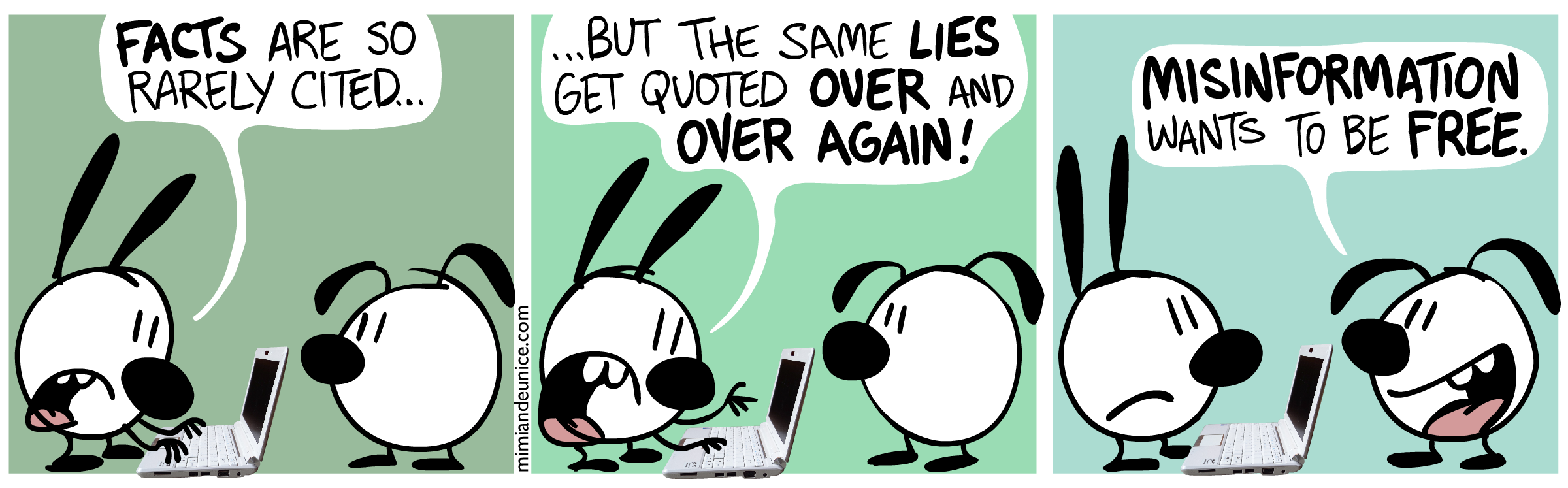
2) Misinformation
This is the trickiest for me-- as a scientist, doctor, and general book nerd, I love reading the data. My patients will tell you that a most common phrase out of my mouth starts with, "Studies have shown. . .". followed up by some really cool meaningful information that helps back up my recommendation.
http://ninapaley.com/mimiandeunice/wp-content/uploads/2010/09/ME_197_Misinformation.png
http://ninapaley.com/mimiandeunice/2010/09/17/misinformation/
And yet, as I have tried to find good information for my patients on the topic of vaccine safety, I have been terribly unimpressed-- by both sides of the topic. Most of the educational materials the CDC publishes is watered down, does not directly address my patients' specific concerns, and basically ends with "trust us". Now, I do trust the CDC, but not everyone does, and I can understand why. The CDC material often feels dismissive and, frankly, a little bit lacking. That being said, I find that most of the anti-vaccine material is inflationary and based in paranoia and fear rather than compiling what limited information is available. I have ordered at least half a dozen books to read on the topic and been thoroughly unimpressed by most of them.  For my vaccine skeptical families, I find myself recommending "The Vaccine Book" by Dr. Sears, which is imperfect but seems the best marriage of the two-- if you have other recommendations, please do let me know.

Let's talk about where you get your information. I'm curious. Can you please share resources you have found helpful? What about some that are unhelpful? Who do you trust? Why? Why not? What makes information trustworthy? What makes it untrustworthy? How much weight does anecdote carry in your decision making? What about a large population study? What can I do as your fellow human to make information feel more helpful?
http://www.washingtonpost.com/blogs/wonkblog/wp/2015/01/27


3) Geographic isolationism
Just like red versus blue, carnivore versus herbivore, and God versus not-God,  we humans tend to surround ourselves with people who have similar thinking and similar modus operandi. Research shows that differences in vaccine uptake are extremely geographical, which literally means that our neighbors reinforce whatever set of beliefs we tend already to have. When we geographically isolate ourselves, we conveniently reinforce our own beliefs (right or wrong) and protect ourselves from intelligent conversation that might challenge those beliefs. And in this way, we don't encourage ourselves (or our counterparts) to develop intelligible and meaningful responses to real and important questions. For example, why are some people so scared of preservatives in vaccines and others aren't? Why are some people so scared of vaccine-preventable illness and others aren't? Why might someone you love and respect make a totally different decision about something you find morally reprehensible? Shouldn't we know the answers to these most basic questions? . To get answers, though, we have to ask. And to ask, we have to not only come into contact with but also feel safe in the company of those who might think differently than us.

Let's reach across the aisle and be curious (and I mean non-judgey curiously curious) and cross over the line every once in awhile. We might be surprised to find ourselves more educated because of it-- being curious with my patients has certainly led me to read more and understand more what people are afraid of. And my patients being curious about my thoughts has hopefully helped them make informed decisions.

4) Sensitivity
Even in my own social circles, I have found the topic of vaccine choices to be off limits in mixed company-- other than in my exam room where I have some say over what conversations are cultivated. Living in Sonoma County, I am well aware that I am often in mixed vaccine company, and as a mother, I wouldn't touch the topic with a ten foot pole. Immunization in my town is right up there with super stigmatizing topics: how much money your family makes and whether you do crazy things in your bedroom. Rather than friends and family being a safe venue for intelligent conversation, I find that people are so sensitive about their choices (in both directions), that we're afraid to ask. In fact, I was out for coffee with a doctor friend just this week, and he casually inquired about another doctor friend's vaccination views. He knew my perspective and felt safe asking me about me, but had never discussed the issue with her, knowing it could get sensitive fast. This returns me to the important notion that we are so influenced by what is happening in our community, so that even people I might consider vocal vaccinators find themselves silenced. I am supremely aware that I may isolate and offend my patients if I simply try to bulldoze them with personal opinions-- I believe it is my duty as a physician to be sensitive to their vulnerabilities and present the topic in a loving and respectful manner-- even (or maybe especially) when I disagree.

Can we lower our own sensitivity about decisions we make for our families and temper our defensiveness so that we might have meaningful conversations on the topic? What might those conversations look like in a non-judgmental space? Might we find some more middle ground?


5) Lack of communication
Communication, of course, involves all of the above issues already mentioned and so much more. And while I personally feel strongly that my own children be fully vaccinated for their well-being as well as the well-being of our community, I am utterly turned off by the general blasting of non-vaccinators. It simply will not work to scare or judge or berate parents into making different choices. It won't work. This is not a war. This is not really about me versus you. This is an opportunity to engage in meaningful conversation about true risks of real disease and true risks and benefits of vaccine, true fears and true needs of parents to do what is right for their child AND for public health and feel comfortable doing so.

Do me a favor, and cool your jets. Ask someone you know and love but that you assume has a different opinion than you on the vaccine matter to share their reasoning. Listen. Discuss. And then share yours. Then listen some more. You might be surprised about what may come out of such a conversation. You might learn something, you might teach something, and we may all be grateful for the step forward.


Thursday, November 7, 2013

Gambling, you in?

The big news this week in Sonoma County was the grand opening of the long-anticipated Graton Resort & Casino, located in Rohnert Park, six miles south of my home in Santa Rosa. To quote The Press Democrat, our local paper, "Thousands of people from around the Bay Area descended on the Graton Resort & Casino for its debut Tuesday, clogging surrounding roads and forcing the casino to temporarily close its doors to long lines of gamblers waiting outside."
Graton Resort & Casino in Rohnert Park. (CBS)
Graton Resort and Casino (CBS)

Per the same PD report, people were crazy excited: some arrived to the casino before 4:30am to be the first ones in, almost all 5,700 parking spaces were full of cars, Highway 101 was backed up for miles, 3,000 slot machines were occupied by 11am, and people were so anxious to see the new digs that they even parked on nearby streets and walked to the casino. Imagine that, walking to the casino?! Hooray for outdoor exercise!

Reading the article literally made me want to vomit, and I had to pause a moment to evaluate why something that drew thousands of people in wonderment was so automatically distasteful to me. After a little bit of research (yes, I am a geek) and some reflection, my nausea is not any better: it may even be worse.

Warning, this is a self-righteous post. Both my doctor self and my public health self are threatened by this place and what it represents to individual patients and to my community at large.

Doctor me: Gambling may be bad for your health.

The act of gambling--"placing something of value at risk for the opportunity to get something of even higher value"-- is not, in and of itself, a bad thing. Let's face it, lots of people gamble. Eighty-six percent of US adults report having gambled at least once in their life, 60% in the last year.  And, similar to other enjoyable aspects of human existence, for most people, gambling is fun and not at all dangerous. In fact, research shows that less than 10% of adults gamblers develop a gambling disorder. That means that more than 90% don't.

But it also means that somewhere between 15 and 20 million adults in this country have a gambling problem. That's a lot of people. To put the number in perspective, in the US, the equivalent of half of all Californians (there are 38 million of us) have a gambling disorder. And that doesn't include the rest of the world!

To be honest, until I delved into my research on gambling and casinos this week, I didn't remember from medical school that "pathological gambling" was actually  a psychiatric diagnosis. It's not a diagnosis I have ever made--though I've certainly worried about a friend or two.


According to the bible of psychiatric medicine, the Diagnostic and Statistical Manual of Mental Disorders (DSMIV), in order to be diagnosed with "pathological gambling" a person has to meet five or more of the following criteria. "Problematic gamblers" meet thee or four criteria.
  • Preoccupied with gambling (e.g. preoccupied with reliving past gambling experiences, handicapping or planning the next venture, or thinking of ways to get money with which to gamble)
  • Needs to gamble with increasing amounts of money in order to achieve the desired excitement
  • Has repeated unsuccessful efforts to control, cut back, or stop gambling
  • Is restless or irritable when attempting to cut down or stop gambling
  • Gambles as a way of escaping from problems or of relieving a dysphoric mood (e.g, feelings of helplessness, guilt, anxiety, depression)
  • After losing money gambling, often returns another day to get even ("chasing" after one's losses)
  • Lies to family members, therapist, or others to conceal the extent of involvement with gambling
  • Has jeopardized or lost a significant relationship, job, or educational or career opportunity because of gambling
  • Relies on others to provide money to relieve a desperate financial situation caused by gambling


Pathological gambling used to be found right alongside trillotrichomania (compulsive hair-pulling), kleptomania (recurrent urge to steal), and pyromania (obsessive desire to set fire to things). However, interestingly, in the newest version of the bible (aka DSMV), gambling disorder has been moved to the section on Addiction.

There are pretty obvious similarities between gambling and substance abuse; these similarities go beyond the financial problems and destruction of relationships that are so often untoward consequences of addictive behaviors. Just like in alcohol and drug addiction, brain imaging studies done while people are gambling actually show activation of the reward areas of the brain (aha, so the reward is more than just the money).  Problematic gamblers report cravings and highs-- just like substance abusers. And, like alcoholism, gambling issues tend to run in families.
Benzodiazepine Addiction Treatment | benzodiazepine treatment | benzodiazepines addiction treatment
Dopamine (our brain's happy juice-- levels go up during sex, drug use, exercise, and chocolate chip cookie eating) and imbalance in the regulation of dopamine probably also play into gambling disorders.  There have actually been case reports of patients with Parkinson disease developing pathological gambling after being started on medicine that messed with their dopamine; and there are similar reports about patients with restless leg syndrome taking dopamine-related medications developing new problematic gambling habits.

Gambling is also associated with other mental health problems. In one study,  people with pathological or problem gambling were compared with  non-gamblers and were 3 times as likely to report ever having experienced major depression, 2 times more likely to report phobias, 6 times more likely to report antisocial personality, 3 times more likely to report current or past alcohol abuse or dependence, and 2 times more likely to report current or past nicotine dependence.

Problematic gambling disproportionately affects young people--people over 65 are much less likely to have a problem (so it's probably okay to let grandma gamble when she wants)--and men, who are three times more likely to have issues than women. Pathological and problem gamblers are more likely than other gamblers or non gamblers to have been on welfare, declared bankruptcy, and to have been arrested or incarcerated.

If you are worried you or someone you know may have a gambling disorder, check out this link , it can help you decide if your worry is warranted.


Public health advocate me: Gambling is bad for our community's health.
Gambling has increased markedly over the last fifty years. In 1960, 61% of Americans reported gambling, in 1999 the number was up to 86%.  In 1978, there were only two states with legalized gambling, and today only two states have not legalized gambling (those prudish holdouts are Utah and Hawaii). Thirteen states allow casinos on non-Indian land.

Casino advocates argue that casinos do good for the wealth and health of communities: casinos create much appreciated new jobs (the new RP casino is expected to generate 2,000 jobs), tax revenue, and local retail income. In doing all this, they increase a community's per capita income, increase individuals' buying power, and directly lead to more people having health insurance. These are all potentially good things. Casinos also draw tourists and other outside visitors, which also increase the income of the community. The wealthier the community, the healthier, right? And don't forget, casinos provide entertainment, which is. . .well. . .fun.

But the negative impact of casinos on the health of communities is not to be minimized. For individuals employed in casinos, the shift work and sleep disturbances are substantial. Casinos also increase second-hand smoke exposure. Casinos  have been shown to increase traffic volume as well as property and violent crimes in a community. And increased gambling has been associated with increased child abuse and domestic violence, unsafe sex practices, alcohol abuse, alcohol related MVAs, and increased suicides.

And the closer the casino, the more likely we will become problematic gamblers. In fact, the availability of a casino within fifty miles is associated with double the prevalence of problem and pathological gamblers, compared to a casino located 50-250 miles away.

If we had a choice, would we really want more problematic gamblers in Sonoma County? Would we want more lung cancer? More road rage? More pollution? More violence toward our children? More alcoholism? More violence?  Is it worth the fun? Or even the jobs?

I will be awaiting the PD reporting of the opening of the next Sonoma County Regional Park or new Santa Rosa City school, which I am sure will draw a similarly eager crowd at 4:30am on opening day, anxious to be the first ones to be let in "the doors". In the meantime, head on down to the new Graton Resort & Casino, not exactly what the doctor ordered. Please take note, the least you can do is park your car across town and walk there-- at least then you will be getting some exercise.
_________________________________________________________


Additional References:
http://blog.ncrg.org/blog/2013/05/evolving-definition-pathological-gambling-dsm-5
http://www.ncpgambling.org/i4a/pages/Index.cfm?pageID=3314#widespreadgambling
http://www.healthimpactproject.org/resources/body/KHI-HIA-issue-brief.pdf
http://www.aafp.org/afp/2000/0201/p741.html
http://www.stlouisfed.org/publications/br/articles/?id=638
http://www.northbaybusinessjournal.com/67388/rp-casino-project-proceeds-despite-opposition/
Uptodate.com: pathologic gambling