Showing posts with label preventive healthcare. Show all posts

Friday, January 30, 2015

Are We at War? The Vaccination vs. Anti-Vaccination Situation

http://www.egmnow.com/platforms/
In light of the current measles outbreak, I'd like to take a moment to reflect on the tremendously divided nature of the vaccine debate (or lack of debate) that exists in our country. It feels eerily similar to the Red vs. Blue State divide that has plagued us now for several decades. In both conflicts, there exists such fear, such misinformation, such geographic isolationism, such supreme sensitivity, and such a lack of communication that we simply stand opposed to one another without any productive conversation. I'm afraid that if we never come together to talk about these things, we'll make no progress.

 And, like many, I'd really like to see progress.

Let me out myself first: I am pro-vaccine. I come to the table with a very strong opinion that vaccination is a good thing. My son is uber-vaccinated-- because we have traveled extensively since he was an infant, he had early vaccines for measles and hepatitis A and is even vaccinated against yellow fever and typhoid. Just this week, he had his kindergarten boosters. I always get the annual flu vaccine, and though I am not convinced the data on pregnant women getting a whooping cough vaccine in the third trimester is that robust, I pulled up my sleeve and ceded to vaccination just last month-- trusting that the risk is minimal. I'm a public health enthusiast.

All this being said, I work intimately with hundreds of families who believe otherwise-- and I don't only work with them, I love them and care for them, and counsel them.

As a family doctor caring for a population who chooses overwhelmingly to make alternative vaccine choices, I often find myself in the uncomfortable place where the two worlds collide. And while I consider myself a  vaccine believer, I also find myself intensely offended by the denigrating tone so many take with people who choose to make the choice NOT to vaccinate. Perhaps it's because I know them personally. And I know that they want what we all want-- what's best for our children. It's just what's "best" may not be so black and white for some as those of us believers want to believe.

I also know that berating parents for the decisions they are making for their children is unlikely to change their minds.

After all, what was your response the last time you were berated?  Did you say, Hey thanks for calling me uneducated and stupid and ignorant. You are soooo right, let me reverse my entire decision-making process and go with yours?

Doubt it.
                                                                         ***

Vaccinators (of which I consider myself one) are those I will call "vaccine believers". That doesn't necessarily mean we believe in God, Santa Claus, or the Republican Party. In fact, a large proportion  is made up of  liberals and skeptics: academics, journalists, returned Peace Corps Volunteers, scientists, and scholarly folk. But vaccinators are a mixed bag: we also include immigrants, the urban poor, and others who either aren't empowered enough to question authority or those who have personally experienced vaccine-preventable disease. Most believers have never read a book or a study about the safety of vaccines-- even the scholarly subset. They don't need to. They take the recommended schedule (available here), follow it like a road map, and trust in the integrity of the institution of medicine and the wisdom of their predecessors. Both instill in them a steadfast trust in the value of vaccines. Perhaps most importantly, believers are descendants of vaccinators. Their perception of risk is reinforced by the community in which they live and by stories of vaccine-preventable illness.They may have traveled to a country where they have seen victims of polio or meningitis. They may be from one of those countries. Or maybe not. They don't harbor suspicion about the morality of governmental recommendations-- in fact, they trust and embrace both the integrity of science and the righteousness of health policy-makers. They do question the morality of people who choose to put communities at risk for their own personal interest.

Anti-vaccinators are those I will call "vaccine atheists".  Again, this designation has nothing to do with religion-- in fact one of the largest outbreaks of measles prior to our current one involved an enclave of orthodox Jews in New York who were choosing not to vaccinate based on religious teachings (see report here). I'm just borrowing recognizable terminology. Where I live, most anti-vaccinators are not particularly religious, though many would call themselves "spiritual". Like believers, atheists are a mixed bag: some are quite educated, others are not. For a range of reasons-- I'm not always sure why-- they do not fear the diseases that vaccines are targeted to prevent. They don't believe in the inherent value of immunization-- and they believe that the potential risks of said vaccines are more likely and more dangerous than the diseases themselves. Just like believers, most vaccine atheists have not extensively read books or studies about the safety of vaccines. They, too, don't really need to. They know vaccines carry risks, and they choose not to chance those risks. Their perception of risk is reinforced by the community in which they live and by isolated reports of horrible outcomes after vaccination. Some specifically fear autism, but for most, the theoretically risks are much more complex. Importantly, most are descendants of non-vaccinators. They look at the CDC recommendations and scoff at the ridiculous number of immunizations recommended. They know that there is always uncertainty in any medical intervention, they wonder what the actual risk is for their child, and they question both the science and the moral integrity of those making official recommendations.

                                                                ***

So, you see, there might be more similarities between the two groups than we might have previously guessed. We are all products of our upbringings. Neither side has read much. Neither can quote validated data. We both dig in our heels and hold our positions. And thus we quickly forget that we share some commonalities-- namely we live on the same planet and maybe even next door to each other, and we should be TALKING to each other.

Here's what I propose we talk about:

1) Fear
Vaccinators fear vaccine-preventable disease. They do not want measles, influenza, meningitis, or polio to be running around our country (and our world) infecting vulnerable children or frail adults. They do not want to return to a place where people die or are disabled from vaccine-preventable illness. Vaccinators also fear that decisions of others not to vaccinate put their children at risk. I get it.

http://wrightliving.com/fear-feel-alive/
Anti-vaccinators fear side effects, preservatives, chemicals, and immune loads. They fear the unknown. And they fear these more than the risk of illnesses that most have never seen. They do not want to expose their children unnecessarily to toxins that may put them at risk. Vaccinators may dismiss these fears-- citing examples of millions of children who have received such toxins without untoward side effects-- but in so doing, they neglect to validate that science is terribly imperfect, that in fact, scientists have frequently historically reversed themselves on interventions once deemed safe and necessary.

Let's talk about what scares us, why it scares us, and see if we can find some common ground. Let's talk about why some are afraid of the diseases and others of the vaccines. Let's see if we can reasonably sort out what we should be afraid of. . .and which fears we can probably set aside.

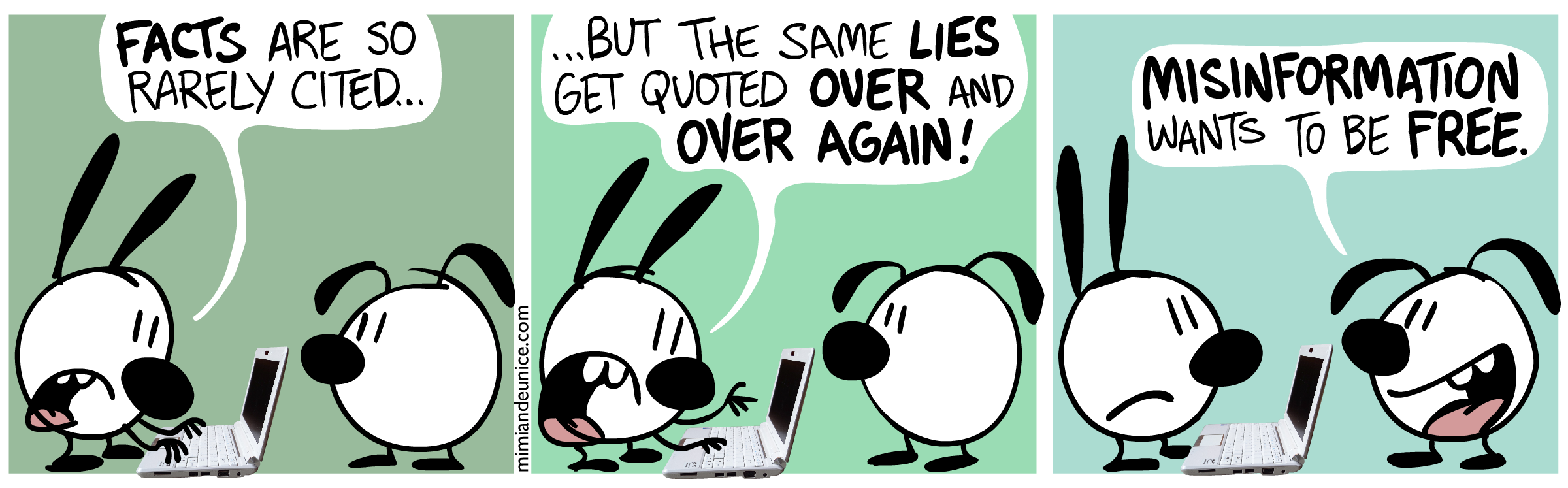
2) Misinformation
This is the trickiest for me-- as a scientist, doctor, and general book nerd, I love reading the data. My patients will tell you that a most common phrase out of my mouth starts with, "Studies have shown. . .". followed up by some really cool meaningful information that helps back up my recommendation.
http://ninapaley.com/mimiandeunice/wp-content/uploads/2010/09/ME_197_Misinformation.png
http://ninapaley.com/mimiandeunice/2010/09/17/misinformation/
And yet, as I have tried to find good information for my patients on the topic of vaccine safety, I have been terribly unimpressed-- by both sides of the topic. Most of the educational materials the CDC publishes is watered down, does not directly address my patients' specific concerns, and basically ends with "trust us". Now, I do trust the CDC, but not everyone does, and I can understand why. The CDC material often feels dismissive and, frankly, a little bit lacking. That being said, I find that most of the anti-vaccine material is inflationary and based in paranoia and fear rather than compiling what limited information is available. I have ordered at least half a dozen books to read on the topic and been thoroughly unimpressed by most of them.  For my vaccine skeptical families, I find myself recommending "The Vaccine Book" by Dr. Sears, which is imperfect but seems the best marriage of the two-- if you have other recommendations, please do let me know.

Let's talk about where you get your information. I'm curious. Can you please share resources you have found helpful? What about some that are unhelpful? Who do you trust? Why? Why not? What makes information trustworthy? What makes it untrustworthy? How much weight does anecdote carry in your decision making? What about a large population study? What can I do as your fellow human to make information feel more helpful?
http://www.washingtonpost.com/blogs/wonkblog/wp/2015/01/27


3) Geographic isolationism
Just like red versus blue, carnivore versus herbivore, and God versus not-God,  we humans tend to surround ourselves with people who have similar thinking and similar modus operandi. Research shows that differences in vaccine uptake are extremely geographical, which literally means that our neighbors reinforce whatever set of beliefs we tend already to have. When we geographically isolate ourselves, we conveniently reinforce our own beliefs (right or wrong) and protect ourselves from intelligent conversation that might challenge those beliefs. And in this way, we don't encourage ourselves (or our counterparts) to develop intelligible and meaningful responses to real and important questions. For example, why are some people so scared of preservatives in vaccines and others aren't? Why are some people so scared of vaccine-preventable illness and others aren't? Why might someone you love and respect make a totally different decision about something you find morally reprehensible? Shouldn't we know the answers to these most basic questions? . To get answers, though, we have to ask. And to ask, we have to not only come into contact with but also feel safe in the company of those who might think differently than us.

Let's reach across the aisle and be curious (and I mean non-judgey curiously curious) and cross over the line every once in awhile. We might be surprised to find ourselves more educated because of it-- being curious with my patients has certainly led me to read more and understand more what people are afraid of. And my patients being curious about my thoughts has hopefully helped them make informed decisions.

4) Sensitivity
Even in my own social circles, I have found the topic of vaccine choices to be off limits in mixed company-- other than in my exam room where I have some say over what conversations are cultivated. Living in Sonoma County, I am well aware that I am often in mixed vaccine company, and as a mother, I wouldn't touch the topic with a ten foot pole. Immunization in my town is right up there with super stigmatizing topics: how much money your family makes and whether you do crazy things in your bedroom. Rather than friends and family being a safe venue for intelligent conversation, I find that people are so sensitive about their choices (in both directions), that we're afraid to ask. In fact, I was out for coffee with a doctor friend just this week, and he casually inquired about another doctor friend's vaccination views. He knew my perspective and felt safe asking me about me, but had never discussed the issue with her, knowing it could get sensitive fast. This returns me to the important notion that we are so influenced by what is happening in our community, so that even people I might consider vocal vaccinators find themselves silenced. I am supremely aware that I may isolate and offend my patients if I simply try to bulldoze them with personal opinions-- I believe it is my duty as a physician to be sensitive to their vulnerabilities and present the topic in a loving and respectful manner-- even (or maybe especially) when I disagree.

Can we lower our own sensitivity about decisions we make for our families and temper our defensiveness so that we might have meaningful conversations on the topic? What might those conversations look like in a non-judgmental space? Might we find some more middle ground?


5) Lack of communication
Communication, of course, involves all of the above issues already mentioned and so much more. And while I personally feel strongly that my own children be fully vaccinated for their well-being as well as the well-being of our community, I am utterly turned off by the general blasting of non-vaccinators. It simply will not work to scare or judge or berate parents into making different choices. It won't work. This is not a war. This is not really about me versus you. This is an opportunity to engage in meaningful conversation about true risks of real disease and true risks and benefits of vaccine, true fears and true needs of parents to do what is right for their child AND for public health and feel comfortable doing so.

Do me a favor, and cool your jets. Ask someone you know and love but that you assume has a different opinion than you on the vaccine matter to share their reasoning. Listen. Discuss. And then share yours. Then listen some more. You might be surprised about what may come out of such a conversation. You might learn something, you might teach something, and we may all be grateful for the step forward.



Wednesday, October 15, 2014

To screen or not to screen, that is the pregnant lady's choice. . .

Screen.
http://st.houzz.com/simgs/2d81b9d600073db2_4-1826/traditional-screen-doors.jpgScreen.
Screen.

That's a lot of what I do as a primary care provider: I screen for diabetes, high cholesterol, chlamydia, hearing loss, cervical cancer, obesity, alcohol misuse, depression, breast cancer, domestic violence, obesity, anemia.

I ask a series of questions, sometimes order a lab test or an imaging study, and then, voila!,  I give a literal pat on the patient's back or send a nice letter. "Your blood pressure looks great!" "I am so glad to hear you are exercising regularly!" "Normal pap, due next in 5 years!" "Nice cholesterol, keep up the flax seed oil!" "Nice body mass index, see ya' again next time!"

I love it when the screening tests come back negative.  That's why I pat so enthusiastically and write always using an exclamation mark. My patients love it too.  I feel good about keeping you healthy! You feel good getting a clean bill of health! Happy patient, happy doctor!

Except when the screening test comes back positive.

Then, what do we do?

First, the worry sets in:
Does that mean I have diabetes? Well, it might.
What is wrong with my cervix? We need to do another test to find that out.
Does my baby have a metabolic disorder? We will have to wait for the confirmation, maybe not.
Are you sure that test result isn't wrong--I feel just fine. . .Well, that's why we screen.


Then it can quickly get confusing:
So is this or is this not a problem? Hmmm. . . not sure, I'll get back to you.
Should I be worried? I don't know quite yet.
How invasive is the follow-up test? Let's talk about that.

Is it necessary? Maybe, maybe not.

Do I have the right to refuse? Always, mostly.


All this confusion, concern, and frustration may be lightened (or even avoided) if both patients and physicians ask and answer a few important questions BEFORE anything is ordered and resulted. Here, are those questions: 

1) Should I have the test in the first place?
2) Exactly what information will these tests provide?
3) What would I do in response to what is learned from these tests?

These three questions can be applied to any range of medical evaluations, including, for example, a cholesterol blood test, a cardiac catheterization (aka angiogram), an MRI, and even pee test for your healthy five-year-old. And, in my opinion, not only can they be applied but really they should be considered before the test is ordered.

***
Human beings like diagnostic tests.

While we don't always appreciate the results, we do value the clear and simple answers that come from these tests. Common examples of diagnostic tests with such clear answers include pregnancy tests, throat cultures, and gonorrhea tests. Yes, you are pregnant (wooo hooo!). Yes, you have strep throat (bummer). No, you do not have gonorrhea (phew, thank goodness, thank giddyup!).

But screening tests are a different beast. Screening tests are designed to capture a subset of the population that may be at increased risk for (you fill in the blank) ________ illness or event. They invoke uncertainty. They give a sense something might be wrong, but hold out the possibility that things may be just fine.

In this era of evidence-based medicine, we have more capacity to order more tests, check more levels, offer more studies, more images, and more screening. In theory, these screening tests pick things up early enough to make a difference-- to make the disease curable or treatable or manageable. Many people think more is better, but is that always true? Screening may save you from something as deadly as cancer, but, unfortunately, it's not always as simple.

As our tool set increases in breadth and depth, physicians and patients find ourselves questioning the validity of many of the things we screen, test and treat routinely: breast cancer, pap smears, prostate cancer, aggressively treating blood pressure, how tightly we should control blood sugars. . .even whether or not we should treat strep throat.
                                                                   ***
Prenatal Genetic Screening
As an example, I want to explore the intricacies and challenges of decision-making regarding prenatal genetic screening.

Prenatal genetic screening-- that is, checking during pregnancy to see if the developing fetus/embryo/baby is congenitally normal-- has been an ever-expanding field since it emerged in the 1970s. Today, it is standard of care at the first or second prenatal visit, regardless of a mother's age, underlying risks, or medical history, to offer women a range of genetic screening options.

This is my very least favorite part of an OB intake. It goes something like this: "Hi, nice to meet you. Congratulations on your pregnancy. I believe that pregnancy is a unique opportunity for me to care for you and your family during a time of wellness and growth. Pregnancy is a healthy state, and let's do everything in our power to keep you healthy. By the way, do you want me to order tests that will see if that sweet baby growing inside of you is defective?"

(Uh, awkward).

It's hard to delineate exactly what percentage of women are accessing prenatal genetic screening, but by including ultrasound evaluation in the definition, then close to 100% of pregnant women choose to have some part of prenatal genetic screening. If you consider non-invasive blood tests, I estimate about half of my patients choose this form of testing.

I have come to believe that most women choose to do genetic screening for one of three reasons: 1) The prenatal care provider is recommending it as standard of care (and boy do we have some serious super powers to convince people to do all kinds of things they don't normally do (remember that, colleagues, please)). 2) People like tests they feel confident they can pass. Most women assume they will have a normal/negative screen. Rarely I have a patient who is really worried about their genetic screen (usually an older mom, or someone with congenital abnormalities in their family), but these are generally the exception. 3) The risk seems low. These tests are non-invasive, non-traumatic for the growing pregnancy, so. . .well, why not?

A history of prenatal genetic screening
While there was the suggestion by the 1930s that there must be a genetic component to Down Syndrome, it wasn't until the 1960s that scientists finally proved that the cause is a replicated chromosome number 21. Down Syndrome (aka Trisomy 21) remains one of the most common congenital abnormalities among live births and one of the most causes of mental retardation. The predicted rate is 1 in 643 births in the absence of selective termination of affected pregnancies.

In the early 1970s, came the juxtaposition of the chromosomal basis for Down Syndrome with the realization that fetal chromosomes could be examined in the amniotic fluid extract of the mother. Welcome the first amniocentesis for genetic screening-- a test in which amniotic fluid is literally pulled out of a pregnant woman's belly and tested for the presence of chromosomal abnormalities. A paper on the topic published in the still-esteemed New England Journal of Medicine sealed the deal.

The lore is that the maternal age of 35 (often nicknamed "advanced maternal age", a term I HATE HATE as a now 37-year-old pregnant lady, myself) was chosen  because, at the time amniocentesis was introduced, the risk of pregnancy loss (due to amniocentesis) was less than the risk of discovering a genetic abnormality. By 1983, there were simmering ethical discussions encouraging offering amniocentesis to women of all ages, especially as the procedure became less risky.

In the early 1990s non-invasive testing arrived: specifically, maternal fetal serum alpha fetoprotein (aka MF-AFP or just AFP). This was the first test offered to all women (regardless of risk) to evaluate for open neural tube defects in babies. The most common neural tube defect is spina bifida. Historically this blood test was offered in the second trimester (weeks 15-20), at which time if a woman screened "positive" (that is, had an abnormal screen), she would be offered an amniocentesis to confirm the presence of an abnormality.

The AFP was soon expanded to the "triple test" (3 markers) and eventually became the "quad screen" (4 markers), which looks at four markers in mom's blood. These are AFP, HCG, estriol, and inhibin--today, we often refer to the combination as the serum integrated screen or the sequential integrated screen.

In 2007, ACOG decided that ALL women should have access to routine prenatal genetic screening (at a cost of somewhere between $100-$2000 per patient) before 20 weeks (aka 5 months) and women of any age could "opt in" for invasive testing. Invasive testing usually refers to either chorionic villous sampling (or CVS) done between 10th and 12th weeks of pregnancy or amniocentesis (aka amnio) usually done at 15-20 weeks of pregnancy.

It was also in 2007 that ACOG began endorsing the use of nuchal translucency (NT) ultrasound, a specialized ultrasound designed to detect Down Syndrome: the tech literally measures a collection of fluid at the back of the growing fetus' neck and gives you a risk score. Turns out that babies with Down Syndrome tend to have more fluid than babies without, so bigger measurements correspond with increased risk.

Chorionic Villous Sampling (CVS) is a test in which a needle is introduced either through the vagina or through the belly to retrieve some actual cells of the placenta (cells that contain the same genetic material as the baby's cells) and then do genetic testing on those cells. Amniocentesis (often referred to as just Amnio) involves a sampling of cells from the amniotic fluid similarly looking for abnormalities. The benefit of both these tests is their accuracy-- upwards of 99%. The downside is the risk, which is a biggie, miscarriage. It's rare, but still quoted at 1in 200 to 1 in 400. Low risk? Yes, unless you are that one who loses your baby.

And now, in 2014, many women can actually choose non-invasive genetic screening, though not quite covered yet by some insurances, certainly quickly gaining speed. These tests look for actual fetal DNA in a woman's bloodstream (imagine that, your baby's DNA is floating around in your bloodstream) and can do chromosomal analysis really early on and really accurately. As I see it, this is the prenatal genetic testing is definitely the screening test of the future: it can be done as early as 10 weeks gestation and it's really really accurate (>99%) for Trisomy (e.g. Down Syndrome). Only downside is it doesn't test for neural tube defects.

The other test not usually considered prenatal genetic screening but that should also be included is what doctors call "The Fetal Survey" and what most families consider "The ultrasound when you can find out whether you are having a boy or a girl." This is an ultrasound done at 17-20 weeks with a special focus on the baby's anatomy (brain, spinal cord, lips, heart, kidneys, etc). While this isn't traditionally included in the umbrella of prenatal genetic screening, it definitely adds credence to the information gleaned through the other tests. It can also be extremely reassuring to a worried family to "see" normal anatomy in their baby.

                                                               ***
Benefits of prenatal genetic screening
  • Increasingly prenatal screening options are non-invasive. Previously women had to weigh risk of losing a baby (miscarriage rate in amniocentesis is quoted as ranging from between 1 in 300 and 1 in 500). Not extremely high but unacceptable if it's you it happens to). Now it's just another blood test, and those of you preggos know you get plenty of those during pregnancy.
  • Reassurance that your unborn child is normal. As a parent, believing that your child is healthy is priceless. If things come back confirming that, parents feel really really relieved.
  • With earlier and better screening, women have earlier and earlier option to terminate an abnormal pregnancy. Terminating a desired pregnancy is never simple-- but the earlier that decision can be made with the most information possible, the easier on the family. 
  • Better preparation for child with birth defects (both emotional and medical management). It is hard for me to imagine a more painful situation than an unanticipated sick new baby. I have been in the room when this unwelcome surprise occurs, and it is terribly painful.
  • Increasingly, women are delaying childbirth, thereby increasing the risk of children having genetic abnormalities. These women may be particularly inclined to having the most information possible before a pregnancy progresses.

Risks of prenatal genetic screening
  • False positives (unneeded anxiety): if you are talking about the standard screening, there are actually MORE false positive prenatal genetic screens than true positives. That means that more people will be told their screen is abnormal and wind up having a healthy baby, than women who are told their screen is abnormal and have a genetically abnormal child.
  • False negative (false reassurance): experienced providers have all experienced a family that had genetic screening and still had an abnormal baby, even one of the diseases picked up by the screening. No test is 100%.
  • Screening doesn't pick up all conditions (even genetic abnormalities) but particularly those others that are not chromosomal, for example autism, cerebral palsy, and many other relatively common conditions.
  • Doesn't predict severity of disease. Some children with Down Syndrome or Spina Bifida are extremely high functioning. Others require lifelong care. These tests don't shed light on the subtleties of your particular child's health issue. This often is difficult to know even after a child is born.
  • Recommended follow-up is invasive testing (including amnio/CVS): people often say "Great, why NOT do a non-invasive test? What's the risk?" The big risk is that if it comes back Screen Positive (aka abnormal), the recommendation is still an invasive test, which has risks including miscarriage. These risks are rare, but it doesn't matter if it happens to you. This is actually changing quite quickly, as the non-invasive tests are gaining ground-- so hopefully this risk is decreasing as I write.
  • Stress and anxiety: don't underestimate the power of stress. For every pregnant woman I have ever dealt with who had an abnormal screening test, the world falls down around them. They lose sleep, suffer tremendously, until more information is known. Worry and fear are powerful emotions
  • Cost: thankfully, here in California, we have an accessible screening program that is covered by

_________________________________
And now, enough about prenatal screening. Back to our original questions that I challenge you to ask yourself for each and every test that is being ordered on your behalf:

1) Should I have the test (i.e. prenatal genetic screening) in the first place?
Ooooh, this is a hard one. I get asked this ALL the time when I counsel my patients through this decision-making process for prenatal genetic screening. There is NO right answer. I generally frame it in this way: For some people, having more information is extremely helpful, it enables them to use that information to activate. For others, having more information is anxiety-producing. Which are you? If the test comes back normal, you will be mostly reassured (though, screening tests are not perfect, and all providers can tell you about the time they delivered a baby that had a normal screen and turned out to be congenitally abnormal. Personally, I can also tell you about the time I delivered a baby that we knew was going to be abnormal and is now an almost 3-year-old normal girl.  This part of the decision is super personal.

2) What exactly does this test tell me?
As I discussed above, screening tests are not the same as diagnostic tests. None of the prenatal genetic screening tests (blood tests, ultrasounds) are going to tell you "what your child has". They will only give you a statistical percentage, that may be reassuring, e.g. as a 40 year old woman, you have a 1/500 chance of having a baby with Down syndrome, but based on this test, your individual risk is actually 1/50,000. This risk stratification can definitely be very reassuring-- but there is no guarantee that you will not be that 1 with an abnormal pregnancy.

3) What would I do in response to the results from this test?
This is a very big an important question when it comes to prenatal genetic screening. Though some might suggest that genetic screening is linked with early pregnancy termination (i.e. abortion), the truth is, there are other choices that families might make based on a genetic screen.

For example,
Some might certainly get a diagnostic amniocentesis, while another family might decide they aren't willing to risk an amniocentesis procedure. 
Someone might choose to birth (or not birth) at home.
Someone might choose to see a different level clinician (e.g. a higher level facility).
Some might prepare themselves emotionally for a special needs child.

Whatever your decision, it's worth it to at least consider how a general results may affect your own decision making. To be fair, it is actually very difficult to predict how individuals might respond to abnormal results until those results are sitting right in front of you.

As usual, mostly I encourage you to have an ongoing relationship with your health care provider, discuss the risks and benefits of any testing you are offered, and please ask questions!D It's your body and your decision, after all.
                        

Additional references:
http://embryo.asu.edu/pages/amniocentesis-prior-1980
https://ohiostatepress.org/Books/Complete%20PDFs/Rothenberg%20Women/14.pdf
www.uptodate.com

Sunday, March 2, 2014

Every Woman Counts

Maria is a very quiet woman. Una mujer muy tranquila.

I have never heard her complain. Not once. Not when I examined the drain left in the place where her left breast had once been, not when her eyebrows disappeared, not when her skin sloughed off in layers under the blistering burn of radiation. Never.

Most questions I ask her, even open-ended ones, are answered with a shy nod or a few soft-spoken words. She has a pursed smile and an awkward shrug of both her shoulders when she is uncomfortable. When I ask her how she is doing, she always has the same response, "Bien, doctora".  To call her understated is an understatement itself.

The day I met her--almost five years ago now--is an indelible memory-- one that will be part of my physician-consciousness forever. Maria walked into the residency training clinic where I was literally pretending to be a doctor and told one of the front office workers she needed an appointment. She was having "a breast problem". An astute receptionist picked up on the understated urgency in her face and stuck her in an opening in my schedule that afternoon. Maria waited for a couple of hours before she was finally roomed, and when I knocked on the door, I had little idea of what was on the other side.

After I introduced myself, Maria told me that she had un problema with her breast that she had been ignoring. She needed help. Her Spanish was a little challenging to understand, and as such, I wasn't quite certain exactly what she was trying to tell me. But when Maria lifted her shirt, it was clear to me that the "breast problem" was not something minor. The Spanish no longer mattered.

Breast cancer. Visible breast cancer. A terrible oozing mess of abnormal tissue, red and dimpled and irritated and just about the ugliest site you can imagine. Cancer that had grown from a seed much deeper in her left breast, enlarged slowly over time (probably years), and eventually eaten from its origins up through her skin-- until she could ignore it no longer. Cancer looks just like you might imagine cancer would look like-- hideous. Undeniably gross.

These are the reasons I imagine Maria ignored her breast cancer.

Initially, she didn't know what it could be.
After all, most of us haven't been to medical school. We can convince ourselves in the middle of the night that we have foot cancer only to discover with the sunrise that it's just a blister on our foot. Most of us also delay seeking treatment-- I am going on eight weeks of a tooth ache and still have managed to avoid making myself a dentist appointment to evaluate that ache.

She was taking care of her family and ignored her own needs in the context of her family's needs
After all, that's what plenty of mothers do on most days of the week-- you know who you are: you're the mama that should really work today out but instead you go to the grocery store to stock up on lunch materials for your kids. You should go get your pap smear but it's lower down on the priority list than taking Junior to soccer practice or to library reading time. You have been meaning to pick yourself up a few new pair of undies but always find yourself in the kids section of the store checking out the clearance items rather than in the hot mama sexy lingerie section.

Once it started to become more clear, she got scared.
Fear is a huge barrier for all of us. It's hard to understand the immense power of fear. I was speaking to a local breast surgeon last week, and she actually said "I liken women with open breast cancer tumors to situations where people need to drop children off in safe drop zones, no questions asked. It just seems to get harder and harder for women to access care as the cancer gets grosser and more obvious. I dream of having a sign on my door that says, 'Please bring your horrible tumor here. I promise I won't ask why you didn't come sooner."

She didn't speak any English. 
When is the last time you got on the phone with some bureaucratic agency (think DMV or your own dear health insurance company) to try to make yourself an appointment or clarify an oblique notice you got in the mail? You were probably on hold forever or stuck in some crazy bramble of phone-tree hell. Just imagine doing that in another language. Virtually impossible.

She had no health insurance
Fear of a diagnosis is one thing, fear of a medical bill is an entirely other beast. As Covered California continues to take hold here, I am happy to see some people having access to insurance for the first time in years (or even ever), but undocumented immigrants are completely ignored in our new legislation. Hopefully, there will be political will in the coming years to change that (see more here). Thankfully, in California, we have a wonderful state-based program called "Every Woman Counts", also known as the Cancer Detection Program (CDP) and its sister program Cancer Treatment Program (CTP). Both of these wonderful safety net programs were essential in getting Maria expedited diagnosis and care. Thank goodness for our safety net! I really hope everyone knows how important it is that there are programs in place. Please don't disregard the power of the safety net.
                                                                       ***

I am happy to report that it has been over four years since Maria's diagnosis, and though she went through a lot during that first year, she is currently cancer free. She continues to do well physically and emotionally. She still never complains.

Our health care system is pretty ridiculous, even for well-educated, English-speaking, documented citizens with excellent top-of-the-mark health insurance coverage. It's scary, often overwhelming, difficult to navigate, and generally not user-friendly. And yet, there are some amazing gems that enable providers like myself to continue doing the work we do. Every Woman Counts is one of those gems-- designed to offer appropriate screening AND treatment for vulnerable populations. It is funded by a combination of federal funds and augmented California tobacco taxes. Woo hoo!

It's awesome for me to discover that there are similar such cancer detection and treatment programs available in all 50 states (see link here). It's administered differently in every state, but the CDC provides matching funds and support for these programs. Thank goodness they exist! But, unfortunately, this program are limited to specific diseases, namely breast and cervical cancer.

Now with our new health care legislation, more gaps are being closed, but there is still much work to be done. Don't you think the next best step is to figure out a way to provide similarly excellent care for all people in our country? And not just for their breasts and their cervices, but perhaps also for their migraines, diabetes, depression, heart disease, and even ingrown toenails.

I do.


Additional references:
http://www.cancer.org/healthy/findcancerearly/womenshealth/earlydetectionofspecificcancers/nbccedp
http://healthpolicy.ucla.edu/publications/Documents/PDF/undocumentedreport-aug2013.pdf
http://www.huffingtonpost.com/2014/01/28/undocumented-immigrants-health-care_n_4679348.html

Tuesday, February 11, 2014

These things are cyclical: the Olympics, fashion, and whooping cough


Whooping cough (in doctor-speak pertussis, caused by the bacterium Bordetella pertussis) is akin to presidential elections, fashion, and the Winter Olympics.


All are cyclical.

But while campaign schedules and the winter games follow a clear and predictable pattern (no one was taken by surprise when the Sochi games kicked off last week), fashion and whooping cough are a little less attached to the Gregorian calendar.

Fashion tends to follow relatively long cycles-- after all, most of us had to recover from the trauma of the '80s before hairspray and leggings showed up again in our closets. Rest assured, traumatized and recovered people, Juno Mars' Superbowl half-time show last week confirmed that the '80s are back.

Whooping cough cycles every 3-5 years
Whooping cough gives us less recovery time because it tends to emerge and submerge in cycles every three to five years.

Weird, right?!

It's not really understood why this is; the cycling probably has to do with a combination of something called herd immunity, parts of the actual bacteria life cycle, and some evil wizardry of nature.

The last bad cycle of whooping cough in California was in 2010.

In California in 2010, there were more than 9,100 documented (laboratory-confirmed) cases of whooping cough.  This was more cases than had EVER been reported in the vaccine era (The whooping cough vaccine came out in the 1940s). It can be assumed that there were many more thousand undocumented cases because many people with the disease don't actually get tested. Of these confirmed cases, 83% were in children under 18. That year, 10 California infants died of whooping cough. All infants were under three months of age, and most were under two months. Nine out of ten were Latinos. One of my wonderful residency classmates was involved in the care of one of those infants here in Sonoma County.

After that peak in 2010, California cases went down:
3,011 total cases in 2011
1,022 total cases in 2012
. . . but now cases seem to be increasing again:
2,372 cases in 2013.

For those Californians paying any attention, whooping cough may be coming baaaaack. Almost predictably so.

And the worst news of all? This week the California Department of Public Health announced the death of a 2 month old infant (the baby first got sick at 4 weeks of age). That's the first whooping cough infant death in California since the 2010 epidemic.

And that worries me-- and I'm thinking it should worry you as well.

What are the signs and symptoms of whooping cough?
You see, whooping cough is a pretty challenging diagnosis to make. In adults, whooping cough initially presents as a pretty mild respiratory illness, looking uncannily like the common cold.

Imagine this scenario: healthy adult comes to see her primary care provider with a few days of runny nose, low grade fever, and an intermittent cough. Astute clinician listens to her patient's lungs, checks her throat and her ears, feels reassured by no obvious bacterial infection (e.g. pneumonia, ear infection) and sends her on her way with recommendations about increasing fluids, considering zinc, vitamin C, honey and a few days of rest.

Welcome to my winter world.

But for one or two of those cases, oops, I could easily miss it! What turns out to be whooping cough looks waaaaay too much like a cold for me to distinguish between the two. As you know, antibiotics are never ever indicated for the common cold, and it can be tough to decide whether to even consider testing someone for pertussis. And we certainly don't want to be handing out antibiotics willy nilly (definite fodder for future post).

After all, odds are overwhelming that the sniffling mess in front of me has a boring cold.

And now, armed with my overly-confident reassurance, that previously healthy adult has been released back out into the world to share her undiagnosed (and untreated) pertussis with her family and friends. Off she goes to cough and snot and whoop about and spread what can be a deadly disease, particularly for our most vulnerable little ones. Let's hope she doesn't have any young infants at home!

It's estimated that for every primary care of pertussis, there are 15 secondary cases. That's pretty contagious.

What happens next is this: after four to 21 days of a little cold, that apparently simple illness develops into a more intense illness with attacks (fits) of intense coughing. These happen most often at night, averaging about 15 fits per 24 hours. This stage (called the "paroxysmal stage") usually lasts a few weeks but can last up to 10 weeks. Ugh. This is why whooping cough is sometimes called the "100 day cough". Pretty annoying.

And this is when some (but not all) people whoop.  If you want to hear what a whoop sounds like, check out this link.

Sounds pretty horrible, right? No one would miss that, right?

Here's the problem, though: plenty of adults and even infants with whooping cough don't actually ever whoop. Hmmm. . . Kiddos (i.e. ages 6-10) tend to be the whoopers, but not always them either. Goodness. And the little ones? Infants can present more subtly with poor feeding, periods of not breathing (aka apnea), and low heart rate.

The good news is that for kids and adults who get whooping cough, it's terribly annoying (no sleep, pee-your-pants annoying) without being life-threatening. The bad news is that infants can die.

In babies under one year old who get whooping cough, about half have to be hospitalized, and for those sick little guys and gals in the hospital, here are the stats:
  • 23% (1 in 4) get pneumonia (lung infection)
  • 1.6% (1-2 in 100) will have convulsions
  • 67% (67 in 100) will have apnea (periods where they stop breathing)
  • 0.4% (1 in 300) will get encephalopathy (disease of the brain)
  • 1.6%  (1-2 in 100) will die

Not good.

Whooping cough vaccination
In addition to the supremely important old school rules that you should ALWAYS follow when you are sick (you know, mom's rules: wash your hands, cover your cough, don't share utensils, don't go to work), the best way we know to prevent the spread of whooping cough is through vaccination.

There are two vaccines on the market: DTaP for infants and young children, Tdap for older children (over 7 years), adolescents, and adults. These are both combination vaccines: the "D" stands for diphtheria, the "T" for tetanus, and the "P" for pertussis. I've been asked a few times by parents who want to vaccinate only against pertussis; there is no way to get a vaccine with pertussis alone--anywhere in the world. It's not available.


The official CDC recommendation is for infants to be vaccinated with four total doses of  DTaP at two, four, six, and 12-15 months. Vaccine efficacy after three doses of DTaP is between 80-95%; unfortunately there is no good data about how much immunity a baby gets after a single shot. There is also a recommended "kindergarten booster" of DTaP at age four to six years.

A study from the 2010 California outbreak showed that of pertussis cases in seven to 10-year-olds, unvaccinated kids, or kids with less than 5 DTaPs were almost nine times as likely to get pertussis than kids who were up to date on their shots.

You may have noticed that the babies who died in the California epidemic of 2010 (and the recent death in 2013) were almost all younger than the lower age limit for the first DTaP. They were too young to be vaccinated, but their family members weren't! It is assumed that those babies were exposed to pertussis by children or adults in their households that were either un- or under-vaccinated. There greatest risk was their loved ones.

This brings up the topic of Tdap, a vaccine licensed in 2005 for adults and children 11 and up.

The Tdap vaccine has been in the news a lot the last few years:
For the last few years, we have been strongly promoting vaccinating people with Tdap who will be around new infants (moms, dads, siblings, caretakers, aunts, grandmas). You know who you are!
While 68% of teens have received their Tdap (brave teenagers!), estimates show that only 8% of adults are up to date on their Tdap vaccine. That's pretty pathetic!

The truth about vaccines
True true, vaccines are not perfect. Patients have the right to be skeptical about recommendations offered to them and to ask questions. It can be really challenging to find reliable answers to those questions, even for providers (like myself) who pride ourselves on being evidence-based and transparent.

Immunizations have side effects-- most of which are not serious--but rare serious effects do occur. God forbid one of those rare things happens to you or someone you love. I hope not! It is also true that no vaccine is 100% protective, and that's a bummer. So if your second cousin's aunt's brother tells you he was vaccinated and still got sick, it's probably true.

It's my daily reality that the medicine I practice is imperfect, but I believe strongly that the information we have for the safety and efficacy of most modern-day vaccines is based on robust scientific research, and we are a healthier human race because these vaccines exist.

If you have specific questions about vaccinations, their risks and/or your children's please please talk to your primary care provider. He/she should be a resource to you. Always.

And please consider getting yourself and your family up to date on their DTaP and/or Tdap vaccines. I know that there are LOTS and lots of reasons not to do it: you don't have time, you hate needles, you are scared of vaccine side effects, it seems like too many shots, it just doesn't seem worth it, you're lazy, you don't actually know who your primary care provider is, you have questions, you just don't want to. . .

Here's the bottom line, are any of these excuses worth a baby's life?

_________________________________________________________
Additional references:
http://www.cdc.gov/pertussis/images/pertussis-graph-2013-lg.gif
http://www.cdph.ca.gov/HealthInfo/discond/Documents/Pertussis%20report%202-4-2014.pdf
http://www.sciencebasedmedicine.org/pertussis-epidemic-2010/
Great lecture specifically for physicians: http://www.cdc.gov/vaccines/ed/pertussis/default.htm
http://www.immunize.org/askexperts/experts_diph.asp
http://www.cdc.gov/pertussis/about/complications.html